Symptoms
Olympus Usb Media Adapter Device Driver free download - USB Video Device, USB Audio ASIO Driver, Linksys Compact Wireless-G USB Adapter, and many more programs. Follow the suggestions provided under the section Using the tool to create installation media (USB flash drive, DVD, or ISO file) to install Windows 10 on a different PC (click to show more or less information) from the article on Download Windows 10 to create an installation media and perform clean installation.
Driver: 2.00: Windows XP/ Windows Vista/ Windows XP 32bit/ Windows XP 64bit/ Vista 32 bit/ Vista 64 bit/ Windows 7 32bit/ Windows 7 64bit.
When you try to install Windows on a computer by using a Windows installation DVD or ISO file, you receive one of the following error messages.
Note This issue occurs when you try to install Windows 7, Windows Server 2008 R2, Windows 8, or Windows Server 2012.
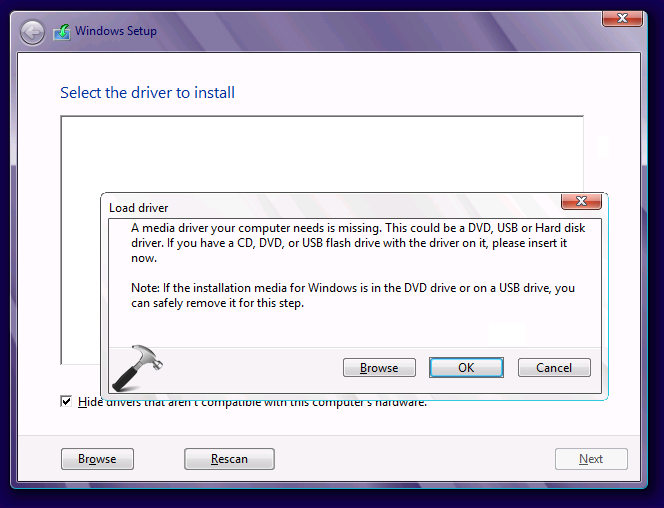
Windows 8 or Windows Server 2012
Load Driver
A media driver your computer needs is missing. This could be a DVD, USB, or Hard disk driver. If you have a CD, DVD, or USB flash drive with the driver on it, please insert it now.
Note: If the installation media for Windows in the DVD drive or on a USB drive, you can safely remove it for this step.
Windows 7 or Windows Server 2008 R2
Load Driver
A required CD/DVD drive device driver is missing. If you have a driver floppy disk, CD, DVD, or USB flash drive, please insert it now.
Note: If the Windows installation media is in the CD/DVD drive, you can safely remove it for this step
Resolution
To resolve this issue, use one of the following methods, as appropriate for your situation:
Burn the installation DVD at a slower speed.
Use a better quality DVD to create the installation DVD.
Update the BIOS firmware for your DVD drive.
Use the Windows 7 USB/DVD Download tool to create a bootable USB flash drive, and then use the USB flash drive to install Windows.
More Information
This issue occurs for one of the following reasons:
The installation DVD is removed during the setup process.
A low-quality DVD was used to create the installation DVD.
The speed at which the installation DVD was burned was too fast.
The DVD drive cannot read the media.
The ISO file is corrupted.
Troubleshooting methods
Use one of the following methods to troubleshoot this issue, as appropriate for your situation:
Run the DVD on a different computer to determine whether the DVD works correctly.
Test your DVD drive by using an official Windows installation DVD.
Attach the ISO file to a virtual machine to check whether it is corrupted.
When you troubleshoot this issue, first check whether the ISO file is corrupted. Each ISO file that you download from the MSDN Subscriber Downloads website has a SHA1 value that you can compare with the SHA1 value on the MSDN Subscriber Downloads website. However, the Microsoft Volume Licensing Service Center (VLSC) site currently does not list checksums or SHA1 values.
To compare the SHA1 values for the ISO file that you downloaded, follow these steps:
Install the Microsoft File Checksum Integrity Verifier tool. To download the tool, go to the following Microsoft Download Center website:
At a command prompt, type the following command, and then press Enter:
Fciv.exe <File name>.iso -sha1
Verify that the SHA1 value matches the SHA1 value that is listed on the MSDN Subscriber Downloads website.
For example, the following information is displayed for the ISO file for Windows 7 Enterprise with Service Pack 1 (x64) on the MSDN Subscriber Downloads website:
File Name: en_windows_7_enterprise_with_sp1_x64_dvd_u_677651.iso
Languages: English
SHA1: A491F985DCCFB5863F31B728DDDBEDB2FF4DF8D1
The following information is displayed when you run the command for the ISO file for Windows 7 with Service Pack 1 (x64):
Command: fciv.exe en_windows_7_enterprise_with_sp1_x64_dvd_u_677651.iso -sha1
Output:
A491F985DCCFB5863F31B728DDDBEDB2FF4DF8D1
en_windows_7_enterprise_with_sp1_x64_dvd_u_677651.iso
The ISO file is not corrupted if the SHA1 value on the MSDN Subscriber Downloads website matches the value that is generated when you run the command.
USB driver is crucial when you want to access your Android device from a Windows computer for file transfer, tethering, rooting, backup or Android data recovery. In most cases, Android USB driver should be automatically installed when you first connect your handset to a Windows 7/8/10 computer. However, it is actually very common that Android USB device drivers fail to install on PC due to system glitch, wrong configuration, compatibility, etc. In this article, we’re going to learn to install USB driver for Android phone/tablet on computer manually. You can also check other tips for fixing Android USB device not recognized problem.
Method 1. Update and Install Android USB Driver on Windows 7/8/10
Sometimes Windows doesn’t recognize Android device because the driver is corrupted and USB driver not working. Hence, you need to update and install proper driver for your Android phone/tablet.
Step 1. Open Device Manager: for Windows 7, go to Start> Control Panel> System and Security> System> Device Manager; for Windows 8/10, press “Windows + X”, then click “Device Manager”.
Step 2. Find and expand “Other devices” or “Portable devices” and find your device. If there is a problem with the driver, it should be marked with a yellow exclamation mark.

Step 3. Right click on the driver and choose “Update Driver Software…”.
Step 4. Choose “Browse my computer for driver software”> “Let me pick a list of device drivers on my computer”, then hit “MTP USB Device” and click Next.
Step 5. You may need to reboot your computer after the update, and then check whether the USB driver problem is solved or not.
Method 2. Download Android USB Driver for Windows from OEM Manufacturer
Download Nebula Media USB Devices Driver
If the driver for your Android device is deleted due to a certain reason, you can still download USB driver from your cellphone manufacturer site. Please download OEM USB driver according to your device manufacturer, such as Samsung, HTC, LG, etc., from the page linked below and learn how to install them on Windows 10/7/Vista computer.
Download and Install OEM USB driver
Here we take Samsung Galaxy S5 AT&T for example:
Step 1. Visit Samsung download page.
Step 2. Click MOBILE> Phones> Galaxy S> Phone Name> Carrier> CONFIRM.
Step 3. On the new page, find Downloads section, and then click DOWNLOAD icon > CONTINUE> I ACCEPT.
Step 4. Once Samsung USB driver is downloaded, you can install it on your computer under the guide of the page linked above.

Method 3. Install Universal Android ADB USB Driver for Windows
If you don’t have a brand or widely-used Android device, or don’t want to seek hard for the specific driver, a universal Android ADB USB driver might work for you. Visit AdbDriver and download ADB Driver Installer to your computer, then follow steps below.
Step 1. Make sure you have USB debugging enabled in your Android device. For this:
- Go to Settings> About phone, and then tap “Build number” 7 times.
- Go back to Settings, then choose “Developer options”.
- Find the “USB debugging” option and tap the button to enable it. Accept warning by tapping on OK button.
Step 2. Connect your device to PC/Laptop using a properly functional USB cable.
Step 3. Unzip the downloaded ADB file, and then launch ADBDriverInstaller.exe.
Step 4. Select your device from the list, and click Install. This process might some time to complete.
Step 5. Once the installation is completed, you’ll find the Device Status marked with OK.
Method 4. Fix Android USB Device Drivers Fail Problem with Command Line
Even though we are quite sure that USB drivers can be successfully installed with Method 1 to 3, it is worth a try to fix “Android USB driver fails to install error” with a command line.
Step 1. Run Command Prompt as administrator: for Windows 10/8, press Windows + X, then choose Command Prompt (Admin); for Windows 7, click Start> All Programs> Accessories, then right-click Command Prompt> Run as administrator.
Step 2. Click Yes when User Account Control window pop up.
Step 3. Copy and paste the following command to the window, and then press Enter:
net localgroup Administrators local service /add
Step 4. Exit the window, and then connect your phone to PC again.
Download Nebula Media Usb Devices Driver Download
Now that Android USB driver has been successfully installed, you can transfer files between mobile phone and PC, or recover deleted photos, contacts or other data from Android device.