When you set inputs and outputs for recording and playback in Adobe Audition 3, you have a choice of sound card drivers: an ASIO (Audio Stream In/Out) driver, or the Audition 3.0 Windows Sound driver.
This document describes how to select a driver and how to configure each kind of driver.
Understanding ASIO and Audition Windows Sound drivers
Compare the window's contents with sound card driver descriptions in the sound card documentation. On the General tab, make sure that the Device status message is 'This device is working properly.' If the Device Status message states that the device is not working properly, contact your sound card or computer manufacturer for further. Q-SYS™ I/O-USB Bridge puts USB access right where you need it, close to every device that needs Q-SYS audio, video, and/or control. The Q-SYS I/O-USB Bridge allows users to integrate networked Q-SYS conference room camera video alongside industry leading audio processing into soft-codec applications via USB connection, all without installing. Realtek High Definition Audio Driver for Windows 10 (64-bit) - ThinkPad. Data Center Mobile: Lenovo. Drivers & Software.
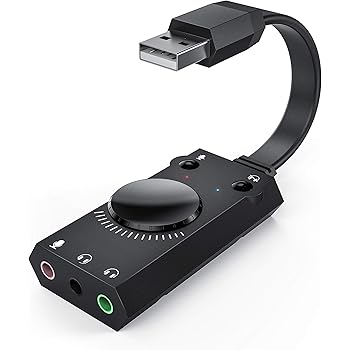
Choice of sound card. The USBlink comprises an inexpensive USB sound card together with a simple audio VOX circuit, housed in a small case. The USB sound card I used is shown on the right. At the time of writing these devices can be purchased from China on eBay for a couple of pounds if you are willing to wait a couple of weeks for delivery. After the device-specific driver is installed, Windows 10 will select that driver instead of the standard USB audio 2.0 driver when you first connect the device. Note See the device manufacturer's user guide for specific instructions about how to install the driver.
Audition 3.0 Windows Sound is the default driver, but Adobe recommends that you select an ASIO driver.
ASIO is a multichannel protocol that allows compatible software to use the multichannel capabilities of ASIO-compliant sound cards.
The benefits of ASIO include:
- Lower signal latency.
- More efficient audio processing.
- Higher data throughput.
- More accurate channel synchronization.
- Better extensibility of audio hardware.
- Greater flexibility of sample rates, sample formats, and input/output channel mapping for playback and recording.
- The ability to record from two or more inputs simultaneously.
If you are using an ASIO-compliant audio device, then you should download and install an ASIO driver that is specifically designed for that device.
If the device manufacturer does not provide an ASIO driver, then you can install a third-party ASIO driver, such as ASIO4ALL; however, a third-party driver may not support all of the device's features.
If you are not able to obtain an ASIO driver, or if you are not using ASIO-compliant audio devices, then use the Audition 3.0 Windows Sound driver.
Audition 3.0 Windows Sound is an emulated driver which uses the system DirectSound driver.
Audition 3.0 Windows Sound provides no additional device functionality beyond what the DirectSound driver offers. For example, the DirectSound driver may be limited to stereo input and output.
- Click the Edit View, Multitrack View, or Surround Encoder tab.
Note: The Edit View, Multitrack View, and Surround Encoder each have their own driver settings. You must configure driver settings for each view individually. - In the Audio Driver pop-up menu, choose a driver for the sound card you wish to use.
Choose an ASIO driver if one is listed; otherwise, choose Audition 3.0 Windows Sound.
If you chose an ASIO driver in Step 3, then go to Configuring an ASIO driver.
Drivers I-o Data Sound Cards & Media Devices Free
If you chose Audition 3.0 Windows Sound in Step 3, then go to Configuring the Audition 3.0 Windows Sound driver.
The window that appears after you click Control Panel displays the proprietary settings of the ASIO driver that you selected. These setting vary from driver to driver.
For details about these settings, see your sound card's documentation, contact the cardâs manufacturer, or contact the publisher of the driver.
Configuring the Audition 3.0 Windows Sound driver
You will configure the Audition 3.0 Windows Sound driver in the DirectSound Full Duplex Setup window. The options in this window are as follows:
- Device Name
The Device Name column lists all available DirectSound outputs and inputs. To activate or deactivate a port, click the box next to the port. If the option box contains an 'X', then the port is activated.
- Buffer Size [Samples]
The Buffer Size [Samples] column displays the number of samples that will be included in the buffer. The audio buffer is used when audio data is transferred between Audition and the sound card. The default Buffer Size is 2048 samples.
A large buffer ensures that playback occurs without audio dropout or other glitches. However, increasing the buffer size increases the audio data latency which may cause delay between the moment Audition begins sending audio data and the moment it actually reaches the physical output. In general, lowering the buffer size improves playback while increasing it will improve recording, but the goal of setting the buffer should be to find a balance between the two.
To change the Buffer Size [Samples] value, double-click the field and enter a different number of samples.
Note the following Buffer Size guidelines:
- To improve recording performance, lower the buffer size (optimal range is 32 to 256 samples).
- To improve playback performance, increase the buffer size (optimal range is 512 to 2048 samples).
- Offset [Samples]
The Offset [Samples] value affects latency of the input or output signal between multiple sound cards.
To change the Offset [Samples] value, double-click the field and enter a different number of samples.
- Audio Channels, Bits per Sample
The Audio Channels and Bits per Sample columns provide information about your sound card. The values in these columns cannot be adjusted using the DirectSound Full Duplex Setup. See the documentation for your sound card for more information on how to change these settings.
- Sync Reference
The Sync Reference setting specifies which sound card clock is used as a reference when you activate multiple sound cards. The sound card in the topmost position is used as the Sync Reference. The DirectSound Output option is selected as the default Sync Reference.
Note: Use Sync Reference to synchronize two or more digital audio devices for sample-accurate recording.
- Port Order
The Port Order section allows you to click Move Up or Move Down to move the selected sound device up or down in the input/output port order. The active port (indicated by an 'X' next to the device name) should be first in the list of the available ports.
- Card Options
The Card Options section displays these two options:
- Full Duplex: Allows recording (input) and playback (output) to occur simultaneously. If the selected sound card supports Full Duplex, the option should appear as activated.
- Start Input First: Specifies that the input port is initiated first for any audio hardware procedure. If the sound card doesn't seem to work correctly with Full Duplex activated (for example, you cannot play back and record at the same time), try activating this option before deactivating Full Duplex.
Starting with Windows 10, release 1703, a USB Audio 2.0 driver is shipped with Windows. It is designed to support the USB Audio 2.0 device class. The driver is a WaveRT audio port class miniport. For more information about the USB Audio 2.0 device class, see https://www.usb.org/documents?search=&type%5B0%5D=55&items_per_page=50.
The driver is named: usbaudio2.sys and the associated inf file is usbaudio2.inf.
The driver will identify in device manager as 'USB Audio Class 2 Device'. This name will be overwritten with a USB Product string, if it is available.
The driver is automatically enabled when a compatible device is attached to the system. However, if a third-party driver exists on the system or Windows Update, that driver will be installed and override the class driver.
Architecture
usbaudio2.sys fits within the wider architecture of Windows USB Audio as shown.
Related USB specifications
The following USB specifications define USB Audio and are referenced in this topic.
- USB-2 refers to the Universal Serial Bus Specification, Revision 2.0
- ADC-2 refers to the USB Device Class Definition for Audio Devices, Release 2.0.
- FMT-2 refers to the Audio Data Formats specification, Release 2.0.
The USB-IF is a special interest group that maintains the Official USB Specification, test specifications and tools.
Audio formats
The driver supports the formats listed below. An alternate setting which specifies another format defined in FMT-2, or an unknown format, will be ignored.
Type I formats (FMT-2 2.3.1):
- PCM Format with 8..32 bits per sample (FMT-2 2.3.1.7.1)
- PCM8 Format (FMT-2 2.3.1.7.2)
- IEEE_FLOAT Format (FMT-2 2.3.1.7.3)
Type III formats (FMT-2 2.3.3 and A.2.3):
- IEC61937_AC-3
- IEC61937_MPEG-2_AAC_ADTS
- IEC61937_DTS-I
- IEC61937_DTS-II
- IEC61937_DTS-III
- TYPE_III_WMA
Feature descriptions
This section describes the features of the USB Audio 2.0 driver.
Audio function topology
The driver supports all entity types defined in ADC-2 3.13.
Each Terminal Entity must have a valid clock connection in compatible USB Audio 2.0 hardware. The clock path may optionally include Clock Multiplier and Clock Selector units and must end in a Clock Source Entity.
The driver supports one single clock source only. If a device implements multiple clock source entities and a clock selector, then the driver will use the clock source that is selected by default and will not modify the clock selector’s position.
A Processing Unit (ADC-2 3.13.9) with more than one input pin is not supported.
An Extension Unit (ADC-2 3.13.10) with more than one input pin is not supported.
Cyclic paths in the topology are not allowed.
Audio streaming
The driver supports the following endpoint synchronization types (USB-2 5.12.4.1):
- Asynchronous IN and OUT
- Synchronous IN and OUT
- Adaptive IN and OUT
For the asynchronous OUT case the driver supports explicit feedback only. A feedback endpoint must be implemented in the respective alternate setting of the AS interface. The driver does not support implicit feedback.
There is currently limited support for devices using a shared clock for multiple endpoints.
For the Adaptive IN case the driver does not support a feedforward endpoint. If such an endpoint is present in the alternate setting, it will be ignored. The driver handles the Adaptive IN stream in the same way as an Asynchronous IN stream.
The size of isochronous packets created by the device must be within the limits specified in FMT-2.0 section 2.3.1.1. This means that the deviation of actual packet size from nominal size must not exceed +/- one audio slot (audio slot = channel count samples).
Descriptors
An audio function must implement exactly one AudioControl Interface Descriptor (ADC-2 4.7) and one or more AudioStreaming Interface Descriptors (ADC-2 4.9). A function with an audio control interface but no streaming interface is not supported.
The driver supports all descriptor types defined in ADC-2, section 4. The following subsections provide comments on some specific descriptor types.
Class-Specific AS interface descriptor
For details on this specification, refer to ADC-2 4.9.2.
An AS interface descriptor must start with alternate setting zero with no endpoint (no bandwidth consumption) and further alternate settings must be specified in ascending order in compatible USB Audio 2.0 hardware.
An alternate setting with a format that is not supported by the driver will be ignored.
Each non-zero alternate setting must specify an isochronous data endpoint, and optionally a feedback endpoint. A non-zero alternate setting without any endpoint is not supported.
The bTerminalLink field must refer to a Terminal Entity in the topology and its value must be identical in all alternate settings of an AS interface.
The bFormatType field in the AS interface descriptor must be identical to bFormatType specified in the Format Type Descriptor (FMT-2 2.3.1.6).
For Type I formats, exactly one bit must be set to one in the bmFormats field of the AS interface descriptor. Otherwise, the format will be ignored by the driver.
To save bus bandwidth, one AS interface can implement multiple alternate settings with the same format (in terms of bNrChannels and AS Format Type Descriptor) but different wMaxPacketSize values in the isochronous data endpoint descriptor. For a given sample rate, the driver selects the alternate setting with the smallest wMaxPacketSize that can fulfill the data rate requirements.
Type I format type descriptor
For details on this specification, refer to FMT-2 2.3.1.6.
The following restrictions apply:
| Format | Subslot size | Bit resolution |
|---|---|---|
| Type I PCM format: | 1 <= bSubslotSize <= 4 | 8 <= bBitResolution <= 32 |
| Type I PCM8 format: | bSubslotSize 1 | bBitResolution 8 |
| Type I IEEE_FLOAT format: | bSubslotSize 4 | bBitResolution 32 |
| Type III IEC61937 formats: | bSubslotSize 2 | bBitResolution 16 |
Class-Specific AS isochronous audio data endpoint descriptor
For details on this specification, refer to ADC-2 4.10.1.2.
The MaxPacketsOnly flag in the bmAttributes field is not supported and will be ignored.
The fields bmControls, bLockDelayUnits and wLockDelay will be ignored.
Class requests and interrupt data messages
The driver supports a subset of the control requests defined in ADC-2, section 5.2, and supports interrupt data messages (ADC-2 6.1) for some controls. The following table shows the subset that is implemented in the driver.
| Entity | Control | GET CUR | SET CUR | GET RANGE | INTERRUPT |
|---|---|---|---|---|---|
| Clock Source | Sampling Frequency Control | x | x | x | |
| Clock Selector | Clock Selector Control | x | |||
| Clock Multiplier | Numerator Control | x | |||
| Denominator Control | x | ||||
| Terminal | Connector Control | x | x | ||
| Mixer Unit | Mixer Control | x | x | x | |
| Selector Unit | Selector Control | x | x | ||
| Feature Unit | Mute Control | x | x | x | |
| Volume Control | x | x | x | x | |
| Automatic Gain Control | x | x | |||
| Effect Unit | – | ||||
| Processing Unit | – | ||||
| Extension Unit | – |
Additional information on the controls and requests is available in the following subsections.
Clock source entity
For details on this specification, refer to ADC-2 5.2.5.1.
At a minimum, a Clock Source Entity must implement Sampling Frequency Control GET RANGE and GET CUR requests (ADC-2 5.2.5.1.1) in compatible USB Audio 2.0 hardware.
The Sampling Frequency Control GET RANGE request returns a list of subranges (ADC-2 5.2.1). Each subrange describes a discrete frequency, or a frequency range. A discrete sampling frequency must be expressed by setting MIN and MAX fields to the respective frequency and RES to zero. Individual subranges must not overlap. If a subrange overlaps a previous one, it will be ignored by the driver.
A Clock Source Entity which implements one single fixed frequency only does not need to implement Sampling Frequency Control SET CUR. It implements GET CUR which returns the fixed frequency, and it implements GET RANGE which reports one single discrete frequency.
Clock selector entity
For details on this specification, refer to ADC-2 5.2.5.2
The USB Audio 2.0 driver does not support clock selection. The driver uses the Clock Source Entity which is selected by default and never issues a Clock Selector Control SET CUR request. The Clock Selector Control GET CUR request (ADC-2 5.2.5.2.1) must be implemented in compatible USB Audio 2.0 hardware.
Feature unit
For details on this specification, refer to ADC-2 5.2.5.7.
The driver supports one single volume range only. If the Volume Control GET RANGE request returns more than one range, then subsequent ranges will be ignored.
The volume interval expressed by the MIN and MAX fields should be an integer multiple of the step size specified in the RES field.
If a feature unit implements single channel controls as well as a master control for Mute or Volume, then the driver uses the single channel controls and ignores the master control.
Additional Information for OEM and IHVs
OEMs and IHVs should test their existing and new devices against the supplied in-box driver.
There is not any specific partner customization that is associated with the in-box USB Audio 2.0 driver.
This INF file entry (provided in a update to Windows Release 1703), is used to identify that the in-box driver is a generic device driver.
The in-box driver registers for the following compatible IDs with usbaudio2.inf.
See the USB audio 2.0 specification for subclass types.
USB Audio 2.0 Devices with MIDI (subclass 0x03 above) will enumerate the MIDI function as a separate multi-function device with usbaudio.sys (USB Audio 1.0 driver) loaded.
The USB Audio 1.0 class driver registers this compatible ID with wdma_usb.inf.
And has these exclusions:
An arbitrary number of channels (greater than eight) are not supported in shared mode due to a limitation of the Windows audio stack.
IHV USB Audio 2.0 drivers and updates
For IHV provided third party driver USB Audio 2.0 drivers, those drivers will continue to be preferred for their devices over our in-box driver unless they update their driver to explicitly override this behavior and use the in-box driver.
Audio Jack Registry Descriptions
Starting in Windows 10 release 1703, IHVs that create USB Audio Class 2.0 devices having one or more jacks have the capability to describe these jacks to the in-box Audio Class 2.0 driver. The in-box driver uses the supplied jack information when handling the KSPROPERTY_JACK_DESCRIPTION for this device.
Jack information is stored in the registry in the device instance key (HW key).
The following describes the audio jack information settings in the registry:
<tid> = terminal ID (As defined in the descriptor)
<n> = Jack number (1 ~ n).
Convention for <tid> and <n> is:
- Base 10 (8, 9, 10 rather than 8, 9, a)
- No leading zeros
- n is 1-based (first jack is jack 1 rather than jack 0)
For example:
T1_NrJacks, T1_J2_ChannelMapping, T1_J2_ConnectorType
For additional audio jack information, see KSJACK_DESCRIPTION structure.
These registry values can be set in various ways:
By using custom INFs which wrap the in-box INF for the purpose to set these values.
Directly by the h/w device via a Microsoft OS Descriptors for USB devices (see example below). For more information about creating these descriptors, see Microsoft OS Descriptors for USB Devices.
Microsoft OS Descriptors for USB Example
The following Microsoft OS Descriptors for USB example contains the channel mapping and color for one jack. The example is for a non-composite device with single feature descriptor.
The IHV vendor should extend it to contain any other information for the jack description.
Troubleshooting
If the driver does not start, the system event log should be checked. The driver logs events which indicate the reason for the failure. Similarly, audio logs can be manually collected following the steps described in this blog entry. If the failure may indicate a driver problem, please report it using the Feedback Hub described below, and include the logs.
For information on how to read logs for the USB Audio 2.0 class driver using supplemental TMF files, see this blog entry. For general information on working with TMF files, see Displaying a Trace Log with a TMF File.
For information on 'Audio services not responding' error and USB audio device does not work in Windows 10 version 1703 see, USB Audio Not Playing
Feedback Hub
If you run into a problem with this driver, collect audio logs and then follow steps outlined in this blog entry to bring it to our attention via the Feedback Hub.
Driver development
This USB Audio 2.0 class driver was developed by Thesycon and is supported by Microsoft.