Speed
A SCSI host adapter is a device used to connect one or more other SCSI devices to a computer bus.It is commonly called a SCSI controller, which is not strictly correct as any component understanding the SCSI protocol can be called a controller.
Throughput is the amount of data that can be moved, processed, or read and written in a certain amount of time. To measure drive speeds, drive throughput is benchmarked, or tested. (IOPS may also be measured; throughput and IOPS results often suggest the same things about a drive.) The throughput of SAS drives is usually higher than that of SATA drives; there are simply fewer delays in general. However, there is some overlap between slower SAS drives and faster SATA drives.
- In most cases, you can accept the default device node. For a hard disk, a nondefault device node is useful to control the boot order or to have different SCSI controller types. For example, you might want to boot from an LSI Logic controller and share a data disk with another virtual machine using a BusLogic controller with bus sharing turned on.
- A significant difference between SAS and SATA is that SAS is engineered to withstand 24/7 use in enterprises, such as datacenters. While a SATA drive could technically be used in all the same ways that a SAS drive could be (e.g., for a server), it would perform more slowly and would be more likely to fail (or suggest failure—give a false positive—even when it has not technically failed).
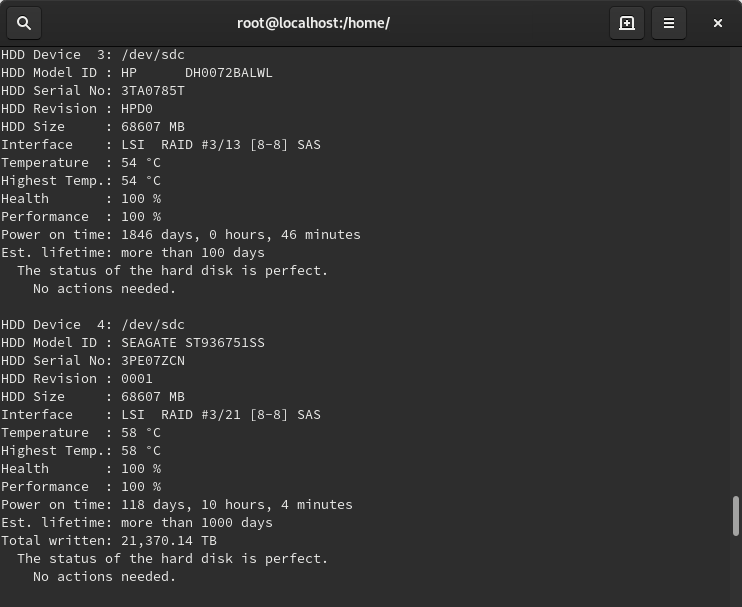
- Major SCSI adapter manufacturers are HP, ATTO Technology, Promise Technology, Adaptec, and LSI Corporation. LSI, Adaptec, and ATTO offer PCIe SCSI adapters which fit in Apple Mac, on Intel PCs, and low-profile motherboards which lack SCSI support due to the inclusion of SAS and/or SATA connectivity.
The number of revolutions per minute (rpm) that a drive can perform affects throughput. Several factors affect drive speed on the whole, but generally the higher the rpm, the faster the drive's throughput and similar performance functions will be. Most consumer-level SATA-based drives operate at 5400 rpm and up to 7200 rpm, while most SAS-based drives operate between 7200 rpm and 15000 rpm.
This difference in speed is most noticeable when handling large files. A 15000 rpm SAS drive will most likely read and write a 500GB file faster than a 7200 rpm SATA drive will.
The data transfer rates of hard drives are also closely related to the type of connector used, whether it is SATA or SAS. A SATA cable transfers data at a rate of about 150MB/s, compared to SATA-II's 300MB/s, and SATA-III's 600MB/s. SAS cables traditionally transferred data at up to 600MB/s; newer versions can transfer up to 1500MB/s.
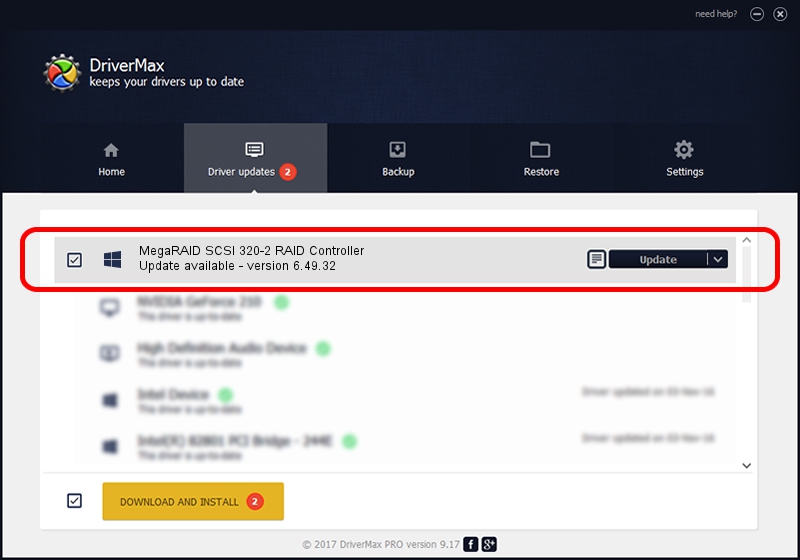
LSI SCSI & RAID Devices Driver Download For Windows
Storage Capacity
SAS prioritizes speed over storage. Accordingly, the vast majority of SAS drives that are sold have fewer than 500GB of hard disk space. Those with over 500GB of space can be very expensive. In contrast, SATA prioritizes storage, so finding an affordable SATA drive with 1TB or more of space is easy.
Reliability
A significant difference between SAS and SATA is that SAS is engineered to withstand 24/7 use in enterprises, such as datacenters. While a SATA drive could technically be used in all the same ways that a SAS drive could be (e.g., for a server), it would perform more slowly and would be more likely to fail (or suggest failure—give a false positive—even when it has not technically failed). This is a costly problem for businesses that depend on reliable hard drives. The mean time between failures (MTBF) for a SAS drive is 1.2 to 1.6 million hours of use at 45 °C, while the MTBF for a SATA drive is 700,000 hours to 1.2 million hours of use at 25 °C.
It is possible to have a hard drive last for several years, regardless of the tasks performed on it; all performance and reliability statistics exist on a bell curve, with some drives performing better or worse than others. Brand may also matter when hunting for the most reliable drive, be it SAS or SATA. In 2013, the backup service Backblaze analyzed the reliability of three popular hard drive brands: Hitachi, Western Digital, and Seagate. Hitachi and Western Digital were the most reliable over time, while nearly 30% of Seagate drives failed after three years of use.
Power Consumption
SAS uses more power than SATA does, which allows it to support server backplanes and have longer cables. A SAS drive uses at least two times as much signaling voltage as a SATA drive does.

Prices for SATA and SAS drives
As of January 2016, a 1TB 7200 rpm SAS drive goes for about $100 on Amazon. e.g. $97 for a 1 TB SAS drive. The SATA equivalent is about 10% cheaper at $87.
Prices usually increase according to the amount of storage space available. For example, the 2TB version of the same hard drive costs $146 for SAS and $114 for SATA.
Lsi Scsi & Raid Devices Driver Download For Windows 10
Uses/Applications
Personal Computing
While both SATA and SAS drives can be used in personal computing, most small business offices and personal setups will not make regular use of SAS' data transfer capabilities. Sacrificing the storage space of a SATA drive, which typically has at least twice as much hard disk space as a SAS drive for a fraction of the cost, will not be a good trade-off in most all cases.
Lsi Scsi & Raid Devices Driver Download For Windows 7
Servers
When it comes to serving up web pages on a web server or hosting games on a game server, SAS is the superior choice because of its low failure rate and high-speed data transfer capabilities.
Video Explaining Uses
The video below talks further about how SAS and SATA are used.
SATA and SATA Revisions
One point that may cause confusion is the fact that there are actually different kinds of SATA drives: SATA revision 1, SATA revision 2, and SATA revision 3 (and 3.1 and 3.2). With each revision, standards have risen, particularly when it comes to transfer speeds. A SATA drive has a potential transfer speed of 150MB/s compared to a SATA III's potential 600MB/s. As such, those who want the affordable storage capacity of a SATA drive, but also crave the speed of a SAS drive, should purchase a SATA III / SATA revision 3 drive with a high rpm.
Watch the video below to learn more about the history of SATA and how the latest versions of SATA compare with SAS.
Lsi Scsi & Raid Devices Driver Download For Windows Xp
Cables
SAS and SATA cables have two ends, one to connect to a drive and one to connect to power via the motherboard. (Hard drives also connect directly to power with a separate cable.) Because of their higher voltage, SAS cables can be up to 10m (33ft) long, while SATA cables can only extend up to a meter (3ft) in length.
SAS cables vary considerably in length and purpose, but most modern SAS cables have 26 to 36 pins and are powerful enough to support multiple devices and backplanes. There are internal and external SAS cables, extension cables, and even cables that will hook SAS controllers to SATA devices.
Meanwhile, SATA's data connector has seven pins, or conductors: three grounds and four active data lines. At the opposite end of the cable, SATA's power connector is much wider and has 15 pins that supply electricity to the drive, ground the cable, and support drive spinup.

SAS is backward compatible with SATA-II and SATA-III, while SATA drives are not backward compatible with SAS.
References
You can use a raw device mapping (RDM) to store virtual machine data directly on a SAN LUN, instead of storing it in a virtual disk file. You can add an RDM disk to an existing virtual machine, or you can add the disk when you customize the virtual machine hardware during the virtual machine creation process.
When you give a virtual machine direct access to an RDM disk, you create a mapping file that resides on a VMFS datastore and points to the LUN. Although the mapping file has the same .vmdk extension as a regular virtual disk file, the mapping file contains only mapping information. The virtual disk data is stored directly on the LUN.
During virtual machine creation, a hard disk and a SCSI or SATA controller are added to the virtual machine by default, based on the guest operating system that you select. If this disk does not meet your needs, you can remove it and add an RDM disk at the end of the creation process.
- Ensure that you are familiar with SCSI controller and virtual device node behavior for different virtual hard disk configurations. See Add a Hard Disk to a Virtual Machine.
- Before you add disks greater than 2TB to a virtual machine, see Large Capacity Virtual Disk Conditions and Limitations.
- Required privilege: Virtual machine.Configuration.Configure Raw device
Procedure

- Right-click a virtual machine in the inventory and select Edit Settings.
- On the Virtual Hardware tab, click the Add New Device button and select RDM Disk from the drop-down menu.
- In the Select Target LUN dialog box, select the target LUN for the raw device mapping and click OK. The disk appears in the virtual device list.
- Select the location for the mapping file.
- To store the mapping file with the virtual machine configuration file, select Store with the virtual machine.
- To select a location for the mapping file, select Browse and select the datastore location for the disk.
- Select a compatibility mode.
Option
Description Physical Allows the guest operating system to access the hardware directly. Physical compatibility is useful if you are using SAN-aware applications on the virtual machine. However, a virtual machine with a physical compatibility RDM cannot be cloned, made into a template, or migrated if the migration involves copying the disk.
Virtual Allows the RDM to behave as if it were a virtual disk, so that you can use such features as taking snapshots, cloning, and so on. When you clone the disk or make a template out of it, the contents of the LUN are copied into a .vmdk virtual disk file. When you migrate a virtual compatibility mode RDM, you can migrate the mapping file or copy the contents of the LUN into a virtual disk.
- Accept the default or select a different virtual device node.
In most cases, you can accept the default device node. For a hard disk, a nondefault device node is useful to control the boot order or to have different SCSI controller types. For example, you might want to boot from an LSI Logic controller and share a data disk with another virtual machine using a BusLogic controller with bus sharing turned on.
- (Optional) If you selected virtual compatibility mode, select a disk mode to change the way that disks are affected by snapshots. Disk modes are not available for RDM disks using physical compatibility mode.
Option
Description Dependent Dependent disks are included in snapshots. Independent - Persistent Disks in persistent mode behave like conventional disks on your physical computer. All data written to a disk in persistent mode are written permanently to the disk.
Independent - Nonpersistent Changes to disks in nonpersistent mode are discarded when you power off or reset the virtual machine. With nonpersistent mode, you can restart the virtual machine with a virtual disk in the same state every time. Changes to the disk are written to and read from a redo log file that is deleted when you power off or reset.
- Click OK.